Showing posts with label Educational. Show all posts

Thursday, September 12, 2024

The Stock Market IS Optimistic

Forward-Looking Markets

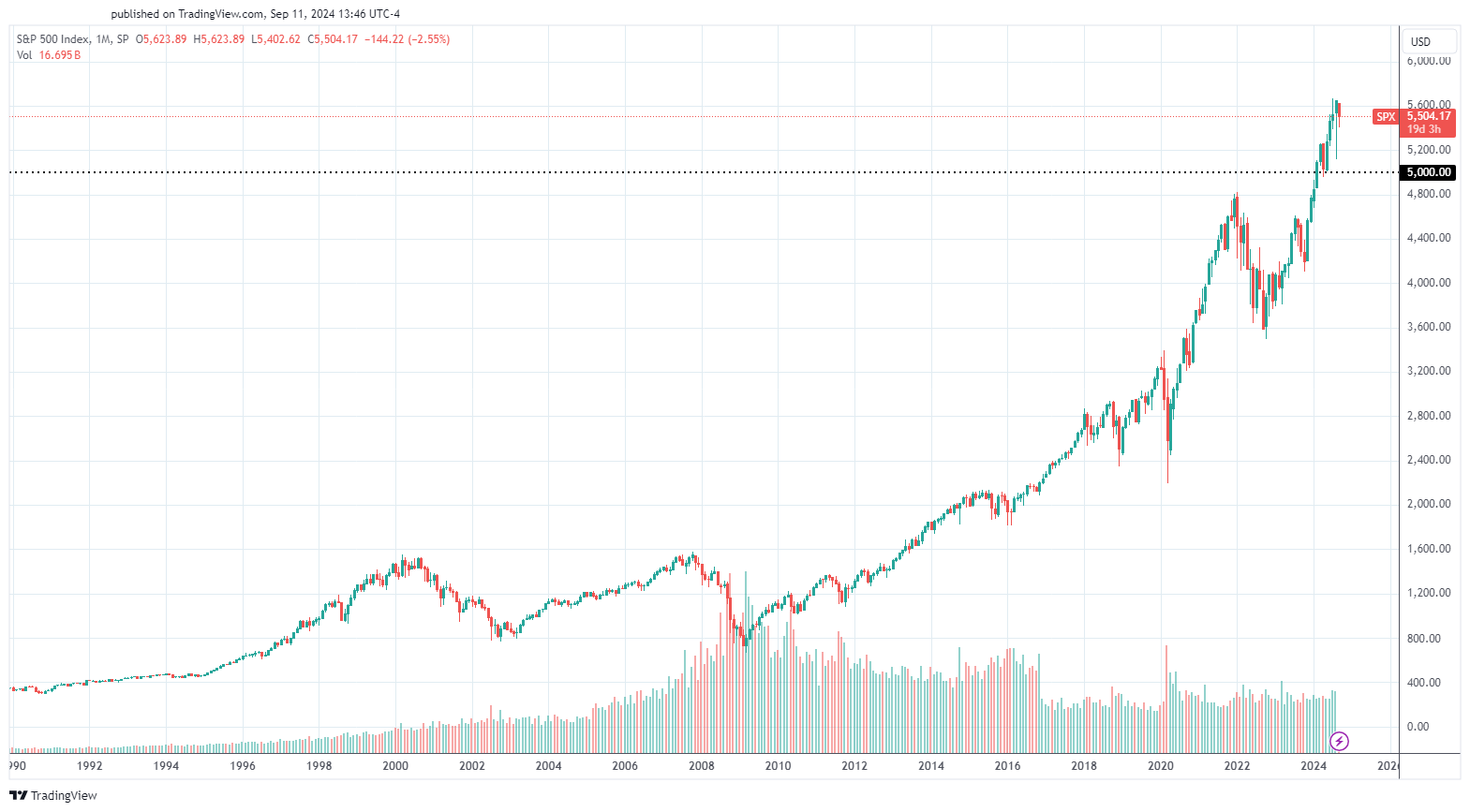
Whether we want to believe it or not, investment markets are optimistic. During times of volatility and swings in the market prices it’s hard to remember. But markets generally go up. Dating back to the very beginning market prices have gone up. It hasn’t been a flat line of course – there have been recessions and corrections and crashes – but here we are near all-time highs. We can’t get there without going up.

Monday, June 24, 2024

Benchmarking - Are You Using the Right One?

Benchmarking

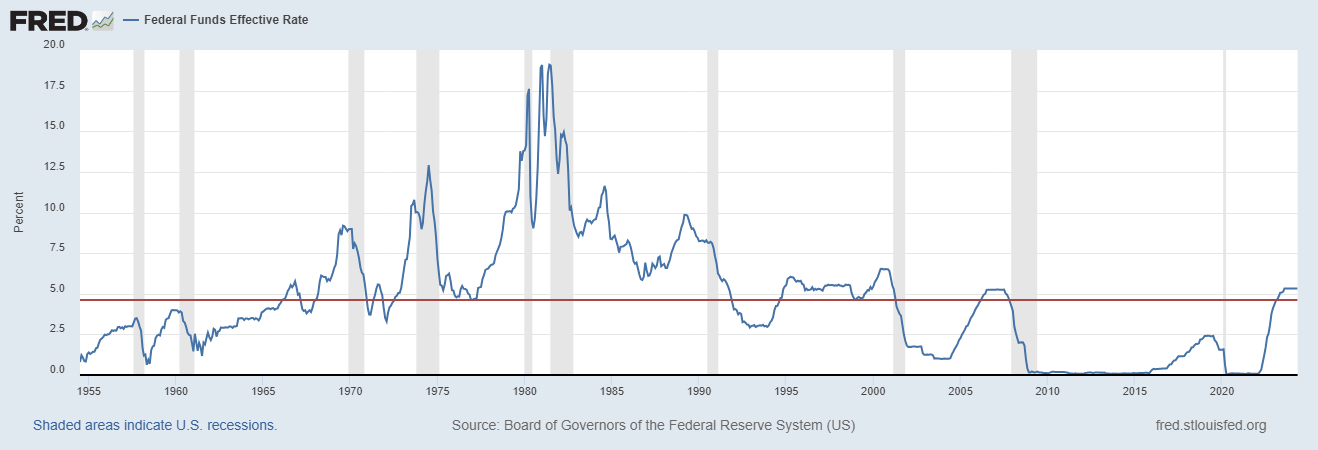
Benchmarking is defined as evaluating or checking something by comparison with a standard. When we think about investments, the benchmark is usually (right or wrong) the S&P 500 index. The trick to benchmarking is picking the right one. Investors with a lower risk tolerance with investments mostly in bonds and cash would likely be confused comparing the performance of their portfolios to the performance of the S&P 500. The same way an investor solely holding international stocks wouldn’t be wise to benchmark against the S&P 500. With the right comparison selected, we can better manage our expectations.  I was catching up with a friend recently and he brought this up with interest rates. The idea is that, since interest rates were at or near 0% since mid-2009, 0% is the benchmark many are using now. Thinking that rates will eventually be cut from the current 5.25% down to 0% again. Bringing with it the idea that mortgages could move back down to the 3%’s and car loans to the same territory. But 0% may be the wrong benchmark. The average Fed Funds rate since 1955 is 4.61%, while the Fed has stated their long-run projection is 2.80%. Perhaps expectations for mortgage rates and bond price growth need to be tempered when a more realistic benchmark is used.

Saturday, May 22, 2021

Bitcoin: Blockchain, Mining, Energy


Bitcoin: Blockchain, Mining, Energy

It’s no secret that Bitcoin and cryptocurrencies, in general, have gained significant popularity and notoriety over the last 12 months. Most notably because the return has been an astronomical 430% over the time period, but also due to companies such as Tesla, MicroStrategy, and Square investing a collective $3.9 billion earlier this year. For anyone invested in Bitcoin or following the asset, this last year has not been without its ups and downs.

What is Bitcoin?

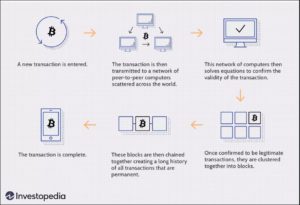
Bitcoin is a decentralized digital currency. All transactions made with bitcoin are noted on a public ledger and verified by a network of computers. Many people and companies are working to verify transactions instead of just one entity, making it decentralized. The public ledger of bitcoin transactions is stored in the blockchain.

Friday, January 29, 2021

Power of the Retail Investor


Power of the Retail Investor

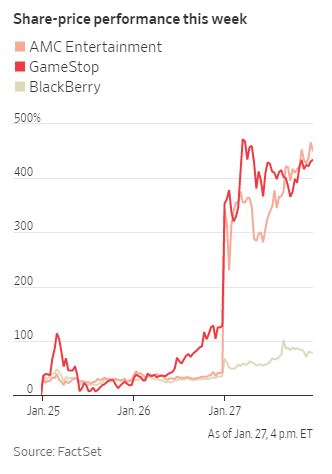
In recent weeks, and more notably recent days, shares of GameStop [GME] and AMC Entertainment Holdings [AMC] have been gobbled up hordes of retail investors. So much so that prices have gone up 320%, and 161% just since Monday, respectively. In “GameStop Mania Reveals Power Shift on Wall Street—and the Pros Are Reeling”, a recent article published in the Wall Street Journal, journalists Gunjan Banerji, Juliet Chung, and Caitlin McCabe explain how this has been happening and the culprit behind these mammoth price movements.


What started as a general conversation about the potential value of GameStop on popular platforms like Reddit, Facebook, Twitter and Discord has turned into an all-out war “between professionals losing billions and the individual investors jeering at them on social media.” So much so that regulators within the SEC are beginning to look into the potential of market manipulation.

Monday, January 25, 2021

Market Predictions


Market Predictions

“The only function of economic forecasting is to make astrology look respectable.”  – John Kenneth Galbraith, Economist


THE 2021 MARKET PREDICTIONS ARE IN, AND THEY’RE PROBABLY WRONG.


Every year, the top investment banks, research institutions, and market analysts make their predictions on where the S&P 500 (stock market) will close the year. They have mountains of research at their disposal, a slew of economic indicators, and they still get it wrong most of the time.

Take 2008 when the markets fell 38% as an example:

  • “Stocks will reach new record highs at some point during the upcoming year.” – Robert C. Doll, Vice Chairman and Chief Investment Officer of Global Equities at BlackRock (January 2009)
  • “It is hard for us, without being flippant, to even see a scenario within any kind of realm of reason that would see us losing one dollar in any of these [credit default swap] transactions.” – Joseph Cassano, AIG financial products head (August 2007)
  • “The Federal Reserve and Congress have delivered a ton of economic stimulus, and that stimulus is set to juice up an economy that has been weak, but not terrible. If everything goes according to plan, the economy will grow faster in the second half of the year, and a recession will have been avoided.” – Kevin Hassett, American Enterprise Institute (June 2008)

Saturday, November 14, 2020

What is "The Market"?


What is “The Market”?

Volatility has played a big part in 2020 and there’s no sense it will stop anytime soon. More people are paying attention to the ebbs and flows of the stock market – whether they want to or not – thanks in large part to the news cycle. “Dow Soars 800 points…”, “Nasdaq jumps 2%…”, “S&P Futures eases below 3,600…”

There are countless attention-grabbing headlines all seemingly referring to the same stock market, but promoting different letters and indices with varying percentages and numbers. What is the difference between the Dow Jones, the Nasdaq, and the S&P 500? And what does “The Market” actually mean?

The Dow Jones Industrial Average

One of the most widely known, and America’s original stock index, the Dow Jones is made up of 30 of the largest stocks from each major sector, excluding utilities and transportation. The value of the index is price-weighted, which means the index is only affected by changes in stock prices. A 1% price change for UnitedHealth Group ($351.70/share) has a much larger impact on the index than a 1% change in Cisco Systems (39.33/share).

Is the Dow a good measure of the stock market? 

Monday, March 12, 2018

The February Budget

Having a budget is one of the most important aspects of personal finance. Whether a natural born spender, saver, or anywhere in between, knowing where your money is going is of almighty importance.

I took the time to catalog and write down everything I spent money on in the month of February. I would consider myself a natural born saver, so some may find this boring. I bring a lunch to work from home essentially every day. Dinner is home cooked almost every day. I also 23 and don't have to pay for health insurance yet. Shout out ma and pa.

My girlfriend has been reading what are called, "Money Diaries" from Refinery 29 and I am amazed at the lack of saving or general knowledge of basic personal finance. I understand being young and being free and traveling and doing what you want, but at some point ya gotta think about your future. If you are turning 30 and have saved nothing, or put nothing towards retirement, you are far behind.

Math Example!

Tuesday, January 23, 2018

Tuesday Thoughts

A few of my thoughts as the work day progressed. Hopefully this will, at the very least, make you google something. 

For the last year it has seemed like the equities market is over-bought, too high, due for a correction, blah blah blah. It has been on my radar, seemingly with many other people as well. As we sprint into 2018 with a vengeance the market seems higher than ever and due for a setback. But are we?
Even though the major markets RSI’s are above 80 and there seemingly hasn’t been a down day since the start, 2018 is a year poised for continued growth.


Monday, June 5, 2017

Reinvest Your Dividends

If you find yourself in a position where you have time and financial security then good job. You're doing something right. Also, investing some of that extra money is a well managed company with a consistent dividend payment it could behoove you. Even better would be to find a company that allows you to reinvest the dividend immediately into more shares. My grandpa sent me a book that speaks on it and, though the book outdated, provides some very valid arguments for reinvesting dividends.


My strongest take-aways regarding the positives of the reinvestment the purchase of shares automatically dollar cost averages for you. Also, there is a pretty good case of making more money* than just receiving the cash dividends and doing it yourself or just keeping it.

Wednesday, May 31, 2017

Buy Low, Sell High


The most basic and well known investing phrase. It seems so simple. You want to buy the stuff at the low point and sell at the high point so you can cement your returns and make money. It's basic and makes sense. Ya know, the goal of investing.


The problem is that most people aren't exceptional investors.

Sunday, April 23, 2017

Part 3: True Costs of Trading


As stated in the book "Investment Philosophies" by: Aswath Damodaran (recommend), there are three main sources that contribute to trading costs. 
1. The bid-ask spread
2. The price impact
3. The opportunity cost of waiting
the source of the following information is from the book listed above. 

Wednesday, April 19, 2017

Part 2: True Costs of Trading


As stated in the book "Investment Philosophies" by: Aswath Damodaran (recommend), there are three main sources that contribute to trading costs. 
1. The bid-ask spread
2. The price impact
3. The opportunity cost of waiting. 
the source of the following information is from the book listed above. 

Wednesday, April 12, 2017

Part 1: True Costs of Trading


This blog is meant to provide you with more information on trading costs. Most retail investors don't understand what goes into trading costs. When I first started, the only cost to me was the commission set by the broker to buy the number of shares. $4.95. This is the only cost you'll explicitly pay, but there are more that come up over time. The more I do this and the more I learn, the more I realize how uninformed I really was.

Tuesday, April 4, 2017

Active vs. Robo Advisors


Almost everyone at some point has worried about money. Where to get it, what to do with it when you have it, how not to lose all of it. The basics. For most people, they don't know enough about the stock market or economics to feel comfortable investing their money on their own, so they turn to money managers. This is where you can get ripped off by the smaller money institutions wit loaded funds and high expense ratios. With the bigger firms there is more to be offered for much less. Below we'll get into what active investing is and the alternative to it if you like it but can't do it yourself. Then we'll try and scrape the surface on the recent financial innovation in robo advisors.

Enjoy the read.

Tuesday, March 28, 2017

Interest Rates, Among Other Things


If you are familiar with interest rates then you'll probably understand everything I am about to say. If you do not, then this may be helpful to understanding them a little further.

The reason I want to try and explain this in a more basic way is because for the longest time I had no idea what people meant or were talking about when they said, "the Fed is going to raise interest rates" and "I wonder if Yellen will increase interest rates during the next meeting." 

Tuesday, February 21, 2017

Falling Forty

In an effort to keep you readers engaged while I study for midterms I wanted to post a brief analysis on the two companies that fell greater than 40% today based on finviz.com.


1. [RTK]

Thursday, February 9, 2017

Down 40%!? [LNKD example]

     Aha, misleading title. This isn't about a specific stock that's down 40%. You didn't miss any huge news. No worries. I wanted to talk about losing 40% as a short term buying opportunity. If a stock falls 40% in one trading day, wouldn't that seem like a great opportunity to buy? Sometimes. To buy that stock there would have to be certain things you believe in and certain things you look for. 

Tuesday, February 7, 2017

Strategy? [TGT]

     There has been a lot of news and prominent investors coming out and saying a load of different things. Some argue that all of Trump's plans will encourage growth and the stock market will continue its bull trend for the foreseeable future. Others are saying that a tax cut could increase the debt dramatically and lead to a market correction. It has been very frothy lately, not wanted to move too much higher of lower since mid December. Seth Klarman in his note to his investors wrote that he is moving toward a larger percentage of cash in his portfolio because he believes there is more downside potential. 

Friday, January 20, 2017

Strong Doesn't Always Mean Better

     There has been a ton of talk about the strength of the dollar recently. Some people who don't know so much about it might automatically think that strong would be good. The dollar must be doing great and everything is coming up roses for America. That's how I was a little bit ago before I finally understood the basics of the foreign exchange. I'm just going to provide a very basic example of why the strong dollar isn't necessarily a good thing for some aspects of the United States.

Thursday, January 19, 2017

Is Panera [PNRA] Forming Cup & Handle?

Panera   [PNRA]


     If they are, it's a smaller one. However, it's a bullish pattern nonetheless. For those of you unfamiliar with the term cup and handle there is an explanation on Investopedia I would recommend looking up. Here is the screenshot I took of the chart. I finally figured out how to draw on them. Lucky you.